
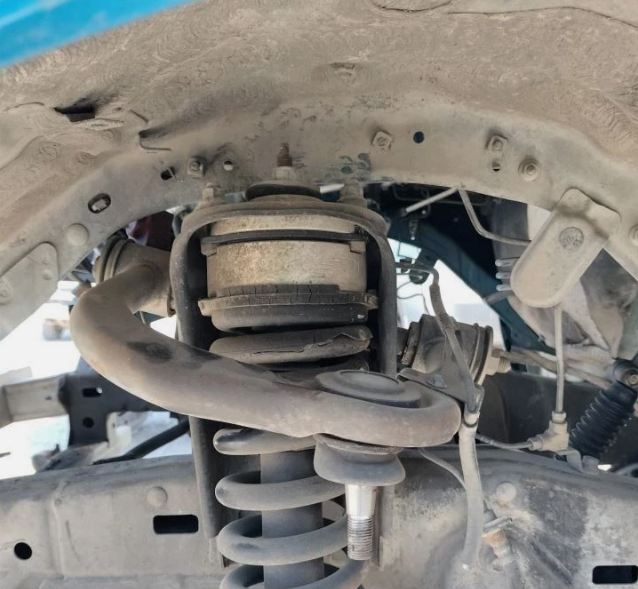
Do You Need Upper Control Arms for a 3rd Gen Tacoma? What Actually Works
Many 3rd Gen Tacoma owners buy upper control arms too early — or wait too long and fight alignment and rubbing problems. This guide explains when you actually need UCAs, when stock arms are still fine, and what changes once you move into bigger lifts and 33-inch tire territory.
On this page
If you are planning a lift on a 3rd Gen Tacoma, one of the most common questions is whether you need aftermarket upper control arms.
The short answer is no — not every Tacoma needs them.
For many daily-driven trucks with a mild front lift, conservative wheel offset, and a clean alignment, the stock upper control arms can work just fine. But once you start pushing lift height, chasing better caster, running 33s, or trying to get more droop travel off-road, aftermarket UCAs become much more useful.
This guide is for 2016–2023 Tacoma owners trying to avoid unnecessary parts, bad alignment numbers, and the common mistake of buying lift parts in the wrong order.
- Stock UCAs can often work with a mild Tacoma lift.
- Aftermarket UCAs become more helpful as front lift height increases.
- The biggest reason to add UCAs is usually alignment, especially caster.
- UCAs can also help with droop travel and tire clearance, but they do not fix every rubbing problem.
- If your truck aligns well, drives straight, and clears your tires, you may not need them yet.
You do not automatically need upper control arms on a 3rd Gen Tacoma. For mild lifts and daily-driver setups, stock UCAs are often fine. Aftermarket UCAs make more sense when lift height increases, caster is hard to dial in, 33s are involved, or you want better front suspension performance off-road.
What Upper Control Arms Actually Do
A lot of Tacoma owners think upper control arms create lift. They do not.
Your coilovers, struts, spacers, or spring settings create the front lift. The upper control arm changes how the front suspension moves and what alignment range is available after the truck is lifted.
In practical terms, aftermarket UCAs usually help with three things.
More usable alignment range
As front lift height increases, the factory front suspension geometry changes. At some point, the stock arm may make it harder to get the alignment where you want it, especially caster.
Better droop travel geometry
Many aftermarket UCAs are built to work better at lifted ride heights. That can help the front suspension move through its travel more naturally, especially on trucks that actually see trail use.
Better fit for aggressive setups
If you are running bigger tires, more negative wheel offset, or a true 2.5 to 3 inches of front lift, UCAs can make the overall setup easier to dial in.
What they do not do is solve every problem by themselves. They will not fix poor wheel choice, an overly aggressive tire setup, or a harsh suspension tune.
When You Probably Do Not Need UCAs
A lot of 3rd Gen Tacomas stay on stock UCAs with good results.
You can often keep the factory arms if your setup looks like this:
- Mild front lift
- Mostly daily driving
- Stock wheels or conservative offset
- No major rubbing issues
- Alignment shop can still get good numbers
- Steering feels stable and centers normally
This is especially common on trucks with a mild front lift in the roughly 1.5 to 2-inch range and a practical daily-driver goal.
If your Tacoma drives straight, does not feel nervous on the freeway, and the alignment print looks good, stock UCAs may still be the right answer. There is no reason to force aftermarket parts onto a setup that is already working.
When Aftermarket UCAs Start Making Sense
Aftermarket UCAs become much more worthwhile when the rest of the build is asking more from the front suspension.
You are running more front lift
The closer you get to a true 2.5 to 3 inches of front lift, the more likely it is that the stock upper control arm becomes a limitation.
That does not mean every truck at that height absolutely requires UCAs. But it does mean your chances of needing them go up.
Your alignment shop cannot get enough caster
This is one of the biggest real-world reasons people add UCAs.
If the truck is lifted and your alignment still comes back with low caster, side-to-side caster mismatch, or a steering feel that never seems fully settled, UCAs may be the missing piece.
More caster generally helps the truck track straighter, return to center better, and feel less twitchy at speed.
You are fighting tire rub with 33s
UCAs are not a guaranteed rubbing fix, but they can help.
When a Tacoma gets more caster, the front tire tends to sit a bit farther forward in the wheel well. That can reduce rubbing at the rear of the fender liner and mud flap area on some setups.
But this is important: if you are running 285/70R17s or another 33-inch setup with aggressive wheel offset, UCAs alone may not solve it. You may still need trimming, liner adjustment, or even a cab mount chop depending on the setup.
You want more off-road suspension performance
If your Tacoma actually uses its front suspension off-road, not just on pavement, UCAs become more valuable.
A quality aftermarket UCA can be a better match for lifted geometry and can help the suspension operate more confidently near full droop. For trucks that see washboard roads, uneven trails, and faster off-road use, that matters more than it does on a daily commuter.
You are building around quality coilovers
Once you step into better front suspension systems, it makes sense to look at the whole package.
A quality coilover setup can outperform the rest of the front suspension if the geometry and alignment are still limited by the factory arm. That is one reason many higher-end Tacoma builds pair lift components with aftermarket UCAs.
Most common reason Tacoma owners actually need UCAs: not because the internet said so, but because the truck cannot get enough caster after a lift.
Signs Your Tacoma May Need UCAs Now
If you already have a lift installed, these are the most common signs that stock UCAs may be holding the truck back.
The truck will not align where you want it
This is the clearest sign. If the alignment tech cannot get solid caster numbers or the truck comes back “within spec” but still drives poorly, it is worth looking at UCAs.
Steering feels vague or nervous
A Tacoma that wanders, feels twitchy on the freeway, or does not return to center well after turns may need more caster than the stock arms can comfortably provide at its current ride height.
You are rubbing at the rear of the front wheel well
If you are running bigger tires and the rubbing is happening toward the back side of the wheel opening, more caster may help move the tire forward enough to improve clearance.
Your build goal has changed
A truck that started as a basic daily driver can slowly become something else. Bigger tires, more trail use, heavier front accessories, and more lift can all push the suspension past the point where stock UCAs still make sense.
When People Buy UCAs Too Early
UCAs are useful, but they are also one of the most over-purchased Tacoma lift parts.
A lot of owners buy them before they know whether they actually have an alignment problem.
That usually happens when people build in this order:
- Buy lift
- Buy UCAs because “everyone says you need them”
- Buy wheels and tires later
- Still end up trimming or reworking the setup
A better order is:
- Decide tire size
- Decide wheel width and offset
- Decide true lift height
- Install suspension
- Get alignment numbers
- Add UCAs if the truck actually needs them
That order reduces wasted money and makes the build easier to tune.
What UCAs Will Not Fix
Aftermarket UCAs can help, but they do not replace smart fitment choices.
They will not fix:
- overly aggressive wheel offset
- oversized tires on too little lift
- rubbing caused by the cab mount area
- poor spring rate choice
- cheap dampers with harsh ride quality
- bad install work
- neglected alignment after suspension changes
If your Tacoma is on a wheel with a very aggressive negative offset and a large tire, you may still need trimming even with a good set of UCAs.
Stock UCAs vs Aftermarket UCAs
Stock UCAs
Best for:
- mild lift
- daily-driven truck
- conservative tire and wheel setup
- owners trying to keep cost down
- no added cost
- factory-style reliability
- low maintenance
- often perfectly fine for basic builds
- limited adjustment range once lift height increases
- less helpful for aggressive alignments
- not ideal for more demanding suspension travel
Aftermarket UCAs
Best for:
- true 2.5 to 3-inch front lift
- trucks on 33s
- owners chasing better alignment numbers
- more serious trail use
- better alignment flexibility
- often easier to get stronger caster numbers
- better lifted suspension geometry
- can improve overall front-end behavior on more advanced builds
- added cost
- some designs need more maintenance than stock
- not every option rides or lasts the same
- can be unnecessary on mild setups
Ball Joint vs Uniball
For most Tacoma owners, the main point is simple: the style matters less than buying a quality arm that matches your goals.
A ball-joint style arm is often attractive for daily-driven trucks because it can be quieter and lower maintenance.
A uniball-style arm is often chosen for more off-road-focused builds, but some owners accept more maintenance and more exposure to dirt and weather in exchange for that design.
This does not mean one is universally better. It means you should buy around actual use, not forum hype.
The Smartest Way to Decide
If you are on the fence, use this simple framework.
Keep your stock UCAs if
- your front lift is mild
- your alignment numbers are good
- the truck drives straight
- you are not chasing more front-end travel
- your tires clear without major issues
Strongly consider aftermarket UCAs if
- you are near the upper end of common Tacoma front lift heights
- your alignment shop cannot get enough caster
- you are running 33s and fighting rear-side tire rub
- you want better front suspension behavior off-road
- your truck has grown into a more serious build
Recommended Path by Setup
Daily driver, mild lift, stock-size or near-stock tires
Stay with stock UCAs unless the alignment proves otherwise.
Daily driver on 285/70R17 or similar 33-inch tire setup
You may be able to run stock UCAs, but this is where aftermarket arms start becoming much more helpful, especially if wheel offset is aggressive or caster is hard to dial in.
2.5 to 3-inch front lift with real trail use
Plan on aftermarket UCAs as part of the total front suspension package.
Truck already lifted and driving poorly
Do not guess. Get the alignment print first. That will usually tell you whether UCAs should be next on the list.
Common Mistakes
Buying UCAs before deciding on wheels and tires
Wheel offset and tire size often determine how hard your setup will be to align and clear.
Assuming “3-inch lift” always means the same thing
Not every advertised lift produces the same real-world front ride height.
Expecting UCAs to eliminate trimming
They can help in some cases, but they do not replace fitment planning.
Ignoring the alignment print
The truck can feel bad even when someone says it is “within spec.” Numbers matter.
Final Answer
Maybe — but not automatically.
If your Tacoma has a mild lift, drives well, aligns correctly, and clears your tires, stock UCAs may still be the best move.
If you are pushing more front lift, struggling to get enough caster, running 33s, or expecting more from the front suspension off-road, aftermarket UCAs become a much smarter upgrade.
The best way to decide is not to copy someone else’s build. It is to look at your actual lift height, wheel and tire setup, alignment numbers, and how you use the truck.
That is what tells you whether upper control arms are necessary — or just extra expense.
Frequently asked questions
Do you need upper control arms for a 2-inch lift on a Tacoma?
Not always. Many Tacomas with a mild 2-inch front lift still work well on stock UCAs, especially if alignment numbers are good and the truck is mainly used on-road.
Do you need UCAs for 33s on a Tacoma?
Sometimes. A 33-inch tire setup increases the chance that UCAs will help, especially if you also have more front lift or aggressive wheel offset. They can improve caster and help move the tire forward slightly, but they may not eliminate trimming needs.
Are upper control arms required for coilovers?
No. Coilovers do not automatically require UCAs. The decision depends more on final ride height, alignment results, and intended use.
Do UCAs improve ride quality?
Not directly in the same way shocks and springs do. Their bigger benefit is geometry, alignment, and suspension behavior. Some trucks feel better after adding UCAs because the front end is better dialed in overall.
Can stock Tacoma UCAs handle off-road use?
Yes, for many moderate-use trucks. But once lift height and suspension demands increase, aftermarket UCAs often become the better long-term match.
Do 2WD Tacomas need UCAs too?
They can. The decision is still mostly about front lift height, alignment, and use case — not just whether the truck is 2WD or 4WD.
Related Guides
Continue your build planning with these internal guides.
Related products
Product recommendations will appear here when the Auto Fit Essentials Shopify store is connected with real inventory. We do not show placeholder products.
Found this helpful?
Share it with fellow Toyota enthusiasts!
Get the Tacoma checklist
Free 3rd Gen Tacoma Maintenance and Upgrade Checklist — practical sequencing tips, no spam.
Keep learning
Explore more guides, maintenance checklists, and fitment tips for your Toyota.
More Toyota Guides
Continue learning with our expert articles