
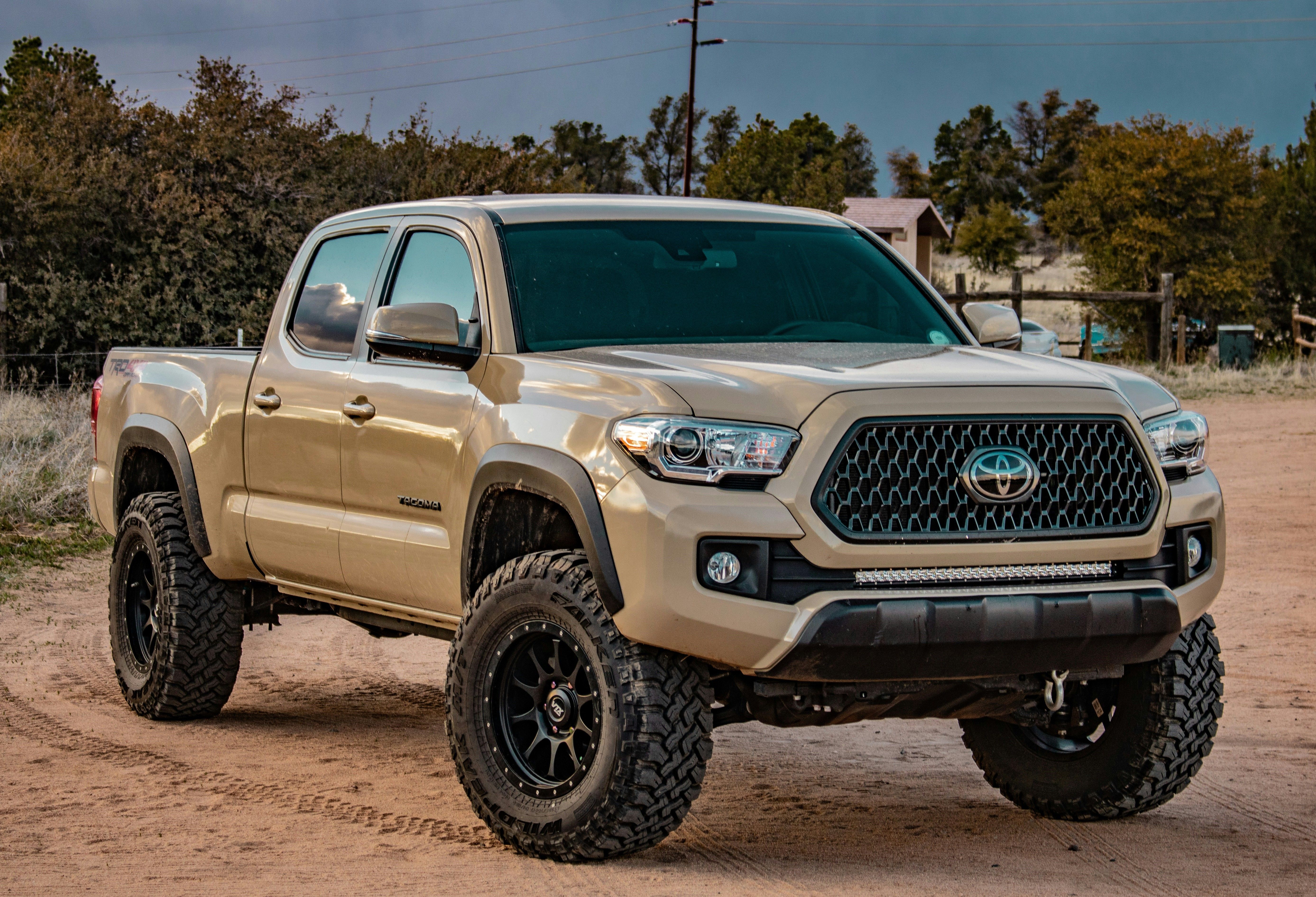
Tacoma Wheel Offset Guide: What Offset Actually Fits and Why It Matters
Tacoma wheel offset affects rubbing, stance, scrub radius, and fitment more than most owners expect. Here’s how wheel offset works and what usually fits best on a 3rd Gen Tacoma.
Check your exact setup before you buy parts
Use the Tacoma Tire Fitment Calculator to estimate rubbing risk by tire size, wheel offset, and lift height.
On this page
Wheel offset is one of the most misunderstood parts of Tacoma fitment.
A lot of owners focus on tire size first, but wheel offset often has just as much impact on whether a setup fits cleanly, rubs badly, or needs trimming. Two trucks can run the same tire size and get very different results just because the wheels sit in a different position.
This guide explains wheel offset in plain English for 2016–2023 Toyota Tacoma owners. If you are trying to understand what offset means, what offsets usually work best, and why aggressive wheels create more problems, this will help you make the right choice before you buy.
- Wheel offset changes where the wheel and tire sit relative to the suspension and fender.
- More negative offset pushes the wheel farther outward.
- More aggressive offset often increases rubbing, trimming needs, and scrub radius.
- A wheel that looks good on paper can still create problems once tire size is added.
- For many Tacoma owners, moderate offset works better than very aggressive negative offset.
On a 3rd Gen Tacoma, wheel offset matters more than many owners expect. More negative offset creates a wider stance, but it also increases the chance of rubbing, trimming, and front-end geometry side effects. For most practical builds, moderate offset is easier to live with than an aggressive wheel.
What Wheel Offset Means
Wheel offset is the distance between the wheel’s mounting surface and the wheel’s centerline.
That sounds technical, but the practical version is simple: offset determines how far in or out the wheel sits.
If the wheel sits farther inward, it may be closer to the suspension. If it sits farther outward, it may be closer to the fender and body.
That position affects:
- tire clearance
- rubbing risk
- stance
- scrub radius
- steering feel
- bearing load
- trimming needs
Offset is usually shown in millimeters, such as +25, +4, 0, or -12.
Positive, Zero, and Negative Offset
Positive offset
Positive offset means the mounting surface is closer to the outside face of the wheel. This pulls the wheel farther inward.
Many factory Tacoma wheels use positive offset. That helps keep the tire more tucked and reduces how far it sticks out past the body.
Zero offset
Zero offset means the mounting surface is centered on the wheel.
This usually pushes the wheel outward compared with stock Tacoma wheel specs, but not as aggressively as many negative-offset wheels.
Negative offset
Negative offset means the mounting surface is farther inward relative to the wheel centerline. This pushes the wheel and tire farther out.
This is where many Tacoma owners move when they want a wider stance or a more aggressive look. It can look great, but it also increases the chance of rubbing and trimming problems.
Why Offset Matters So Much on a Tacoma
A Tacoma does not respond to wheel offset the same way a stock street car does.
These trucks already have limited room in key areas once you start adding larger tires. As soon as you combine a wider wheel, more aggressive offset, and a larger tire, clearance gets tighter fast.
Offset matters because it changes where the tire swings during turning and suspension movement.
That means the wrong offset can cause contact with:
- mud flaps
- fender liners
- the rear of the front wheel well
- body mount areas
- suspension components in some setups
It also changes how the truck drives. A more aggressive wheel position can affect steering feel and increase the load placed on front-end components over time.
Tire size alone does not tell you whether a setup will fit. Offset changes the tire’s position, and that can turn a “should fit” setup into one that rubs badly.
Offset vs Backspacing
A lot of Tacoma owners see both offset and backspacing listed and are not sure which matters more.
Offset and backspacing are just two different ways of describing wheel position.
Offset is measured from the wheel centerline.
Backspacing is measured from the mounting pad to the back edge of the wheel.
For most Tacoma buyers, offset is the easier number to compare because it is what most aftermarket wheel listings use. But the bigger point is this: both describe where the wheel sits, and both affect fitment.
You do not need to obsess over both numbers if you already understand where the wheel will sit relative to stock.
Why More Negative Offset Causes More Rubbing
This is the part many owners learn after buying wheels.
When offset becomes more negative, the wheel moves outward. That creates a wider stance, but it also changes the tire’s path as the wheels turn.
A tire that sits farther outward often swings into the body and liner areas more aggressively during turning. That is why the same 285 tire can behave very differently on one wheel versus another.
More negative offset commonly leads to:
- more rubbing at the rear of the front wheel well
- more contact at the mud flap and liner area
- greater need for trimming
- higher likelihood of cab mount interference on larger setups
- more tire poke outside the fender
- more road spray and mess down the sides of the truck
For some owners, that tradeoff is worth it for the look. For others, it creates problems they did not expect.
Common Tacoma Offset Ranges in Real Builds
Stock-like and conservative offsets
These are usually the easiest to live with.
They tend to keep the tire tucked better, reduce rubbing risk, and work well for owners who want practical daily-driver fitment without pushing the limits.
Moderate offsets
This is often the sweet spot for Tacoma owners.
A moderate offset can improve stance without going so aggressive that every larger tire setup becomes a trimming project. Many owners find this range gives them the look they want while still keeping the truck easier to align, clear, and drive.
Aggressive negative offsets
This is where things get more complicated.
Aggressive negative offset can look great on lifted Tacomas, but it increases the chance that you will need trimming, liner adjustment, or a cab mount chop with larger tires. It also tends to push the build farther away from simple, clean fitment.
What Offset Usually Works Best
For most 3rd Gen Tacoma owners, the best offset is not the most aggressive one.
A moderate offset is usually the best balance of:
- stance
- tire clearance
- steering behavior
- trimming needs
- long-term livability
That is especially true for daily-driven trucks.
A lot of owners choose aggressive negative offset because it looks good in photos, but then end up dealing with rubbing, extra trimming, and more compromises than they expected. If your goal is a clean, functional setup that works well on-road and off-road, moderate offset is usually the smarter move.
Offset and Tire Size Work Together
You should never choose wheel offset in isolation.
The same wheel that works fine with a smaller all-terrain tire may become a problem once you step into 285/70R17 or another larger setup. Tire width, actual section width, tread design, and wheel width all affect the final result.
That is why fitment has to be looked at as a package:
- lift height
- wheel width
- wheel offset
- tire size
- tire actual measurements
- alignment
- intended use
A wheel that is manageable with a stock-size tire can become much harder to live with once you add a true 33-inch tire.
Offset and Lift Height
Lift helps, but it does not cancel out bad wheel choice.
A lot of Tacoma owners assume that once they add lift, they can run any wheel offset they want. That is not how it works.
Lift mainly helps vertical clearance. Offset affects horizontal and turning clearance. Those are different problems.
That is why a lifted Tacoma can still rub badly with aggressive wheels.
Even with lift, very negative offset can still create rubbing at the back of the front wheel well or lead to trimming needs with larger tires.
Lift helps create room above the tire. Offset changes where the tire sits during turning and suspension movement.
Offset and 33-Inch Tires
Once you move into 33-inch Tacoma tire setups, offset becomes even more important.
A 33-inch tire on a practical wheel is very different from a 33-inch tire on an aggressive wheel. The more outward the tire sits, the more likely you are to run into rubbing at full lock or during suspension compression.
That is one reason many owners running 33s find that moderate wheel offset is easier to manage than aggressive negative offset.
If your goal is to fit 33s with fewer headaches, wheel choice matters just as much as lift choice.
Offset and Steering Feel
Wheel offset is not only about fitment. It can also change how the truck feels on the road.
As the wheel moves outward, scrub radius changes. That can make steering feel heavier, more reactive, or less settled over rough pavement depending on the setup.
An aggressive wheel can also contribute to a truck feeling busier on the road, especially when paired with larger tires and a lift.
That does not mean aggressive offset is always bad. It means there is a cost to the look, and that cost is not only trimming.
Offset and Front-End Wear
This topic often gets oversimplified, but the basic point is fair: moving the wheel farther outward changes the leverage acting on front-end parts.
That can increase stress on components compared with a more conservative wheel position.
For many owners, that may not become a major issue right away. But in general, a moderate wheel position is easier on the truck than a very aggressive one.
This matters more if your Tacoma sees:
- larger tires
- rough roads
- frequent off-road use
- added vehicle weight
- long-term daily driving mileage
Why Wheel Width Matters Too
Offset alone does not tell the whole story.
Wheel width also changes where the inner and outer edges of the wheel and tire end up. A wider wheel with the same published offset can still sit differently than a narrower one.
That means a 17x8.5 wheel and a 17x9 wheel with similar offset numbers may not behave exactly the same.
For Tacoma fitment, wheel width and offset always need to be considered together.
Common Mistakes Tacoma Owners Make with Offset
Choosing offset for looks only
This is the biggest one.
A wheel may look perfect in photos but still create rubbing, poke, trimming, and steering tradeoffs that are annoying in real-world use.
Assuming lift solves everything
Lift helps, but it does not erase the side effects of aggressive offset.
Looking at tire size without wheel specs
You cannot judge fitment correctly by tire size alone.
Ignoring real tire measurements
Not all tires in the same advertised size measure the same in real life. Some run wider or taller than others, and offset becomes more critical when that happens.
Going too aggressive too early
Many owners would be happier with a more moderate wheel if their goal is daily-driver function with occasional off-road use.
The Smartest Way to Choose Offset
If you are buying wheels for a 3rd Gen Tacoma, start with your actual goal.
If you want the easiest fitment
Stay more conservative. This gives you the best chance of avoiding unnecessary trimming and keeping the truck comfortable to live with.
If you want a better stance without going extreme
A moderate offset is often the sweet spot.
If you want the aggressive look
Be honest about the tradeoffs. You may need trimming, you may have more rubbing, and the truck may feel different on the road.
The more aggressive the wheel, the more important the rest of the setup becomes.
Recommended Mindset for Tacoma Fitment
The best Tacoma wheel setup is usually not the one that looks most dramatic in a photo.
It is the one that fits your real use.
For a daily driver, moderate offset usually makes more sense than aggressive negative offset. For a trail-focused truck on larger tires, you may still choose a more aggressive wheel, but you should do it knowing it will likely require more compromise.
The goal is not just to make the truck look good parked. The goal is to make it work well every day.
Final Answer
If you are building a 3rd Gen Tacoma, wheel offset deserves more attention than most owners give it.
Offset changes where the wheel and tire sit, which affects rubbing, trimming, stance, steering feel, and long-term livability. More negative offset may look better to some owners, but it usually brings more tradeoffs.
For most practical Tacoma builds, moderate offset is the smart middle ground. It improves stance without pushing the truck into unnecessary fitment problems.
If you are deciding between aggressive and practical, practical usually wins in the long run.
Frequently asked questions
What is wheel offset on a Tacoma?
Wheel offset is the position of the wheel’s mounting surface relative to the wheel centerline. It determines whether the wheel sits farther inward or outward.
Why does wheel offset matter on a Tacoma?
Offset affects rubbing, stance, steering feel, scrub radius, and how much trimming may be needed. It can change fitment just as much as tire size.
Is more negative offset better for a Tacoma?
Not necessarily. More negative offset creates a wider, more aggressive stance, but it usually also increases rubbing and trimming needs.
Does lift fix wheel offset problems?
No. Lift helps with vertical clearance, but offset changes where the tire sits during turning and suspension movement.
What offset is best for a daily-driven Tacoma?
In general, a moderate offset is the easiest to live with because it balances stance and fitment without creating as many side effects as aggressive negative offset.
Does wheel width matter along with offset?
Yes. Offset and wheel width work together. A wider wheel with the same offset can still sit differently and affect clearance.
Why do some Tacoma owners regret aggressive wheels?
Because aggressive offset often creates more rubbing, more trimming, more poke, and more daily-driving compromises than expected.
Related Guides
Continue your build planning with these internal guides.
Related products
Product recommendations will appear here when the Auto Fit Essentials Shopify store is connected with real inventory. We do not show placeholder products.
Found this helpful?
Share it with fellow Toyota enthusiasts!
Get the Tacoma checklist
Free 3rd Gen Tacoma Maintenance and Upgrade Checklist — practical sequencing tips, no spam.
Keep learning
Explore more guides, maintenance checklists, and fitment tips for your Toyota.
More Toyota Guides
Continue learning with our expert articles