
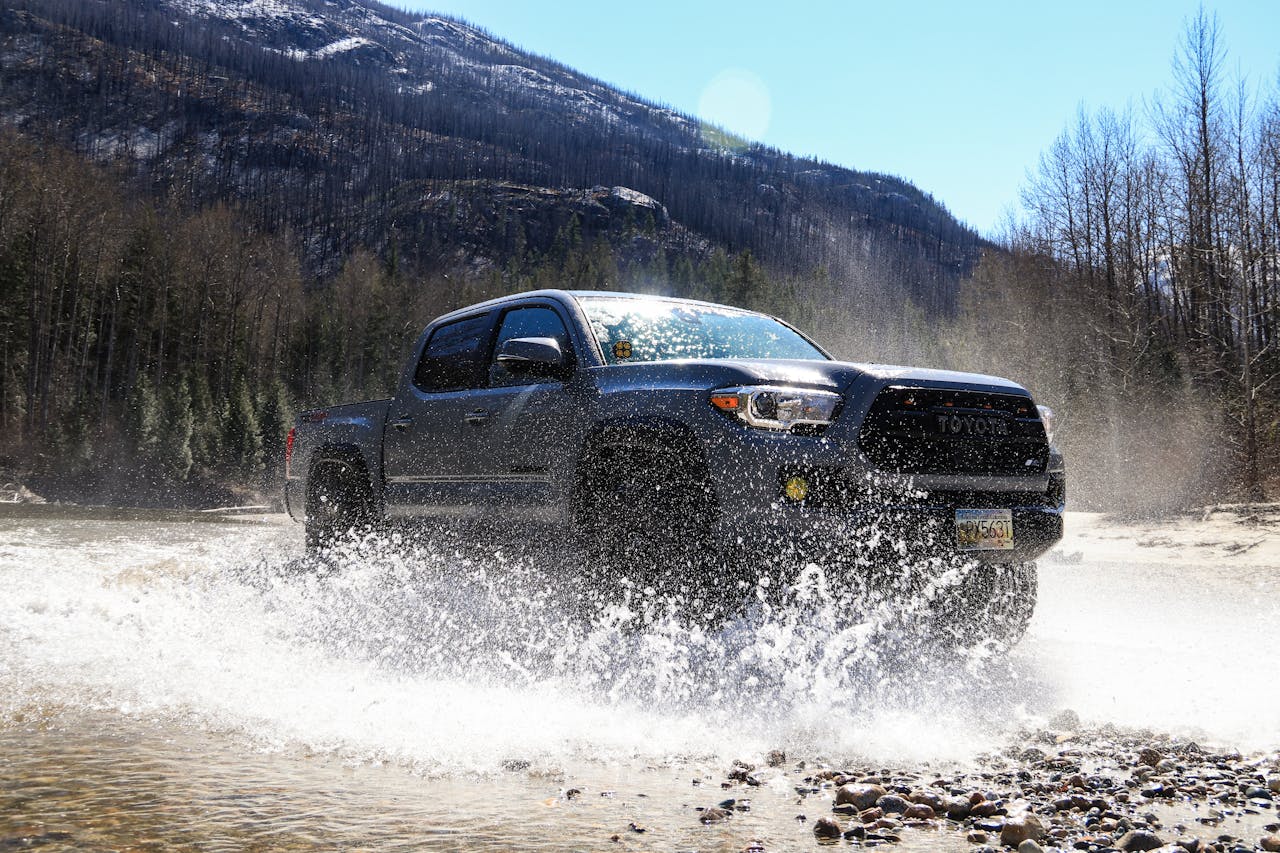
Tacoma Lift Ride Quality: Why Some Setups Feel Harsh (and How to Fix It)
Applies to: Toyota Tacoma · 3rd Gen · 2016–2023
A harsh ride after lifting your 3rd Gen Tacoma usually comes down to spring rates, damping, geometry, and tire choices—not just the lift height. Here's how to diagnose the cause and dial in a smoother setup.
Difficulty: intermediate
Check your exact setup before you buy parts
Use the Tacoma Tire Fitment Calculator to estimate rubbing risk by tire size, wheel offset, and lift height.
On this page
- Ride harshness after a lift is usually a spring rate and damping problem, not just a height problem.
- Overly stiff coilover springs or heavy add-a-leaf setups often make an empty truck ride rough on pavement.
- Correct alignment after a lift protects ride feel, tire wear, and steering stability—get it done promptly.
- Tire size, sidewall, and air pressure have a huge impact on perceived harshness—often more than the lift itself.
- Matching shock valving to your spring rate is what separates a plush lift from a jarring one.
- Upper control arms may be needed for clearance and geometry at taller lifts, but they don't fix harsh springs by themselves.
- Small changes—airing down slightly, tuning coilover preload, or choosing a lighter spring rate—can transform daily comfort.
Why Lifted Tacomas Often Feel Harsher
Many 3rd Gen Tacoma (2016–2023) owners install a lift expecting a smoother, more capable ride and end up with something that feels stiffer and busier on pavement. This is common, and it usually isn't the lift height itself causing the problem. Ride quality is a combination of spring rate, shock damping, suspension geometry, and tire setup—and a lift changes several of these at once.
When you understand what each component does, you can target the actual source of harshness instead of guessing. For a broader look at the topic, see our companion guide on [Tacoma ride quality after a lift](/tacoma-ride-quality-after-lift).
Spring Rate: The Most Common Culprit
Spring rate is how stiff the spring is—how much force it takes to compress it a given distance. Many lift kits ship with springs that are stiffer than stock so they can carry accessories like bumpers, winches, and skid plates.
The problem: if your truck is mostly empty, a heavy spring rate has nothing to compress against. The result is a ride that feels firm, jittery, and quick to react over small bumps.
- Too-stiff front coils often show up as a busy, jarring ride on rough pavement.
- Heavy add-a-leaf or aggressive leaf packs in the rear can make the back end skip and hop when unloaded.
- Springs designed for heavy front-end weight may ride harshly if you never installed that heavy bumper.
Fix: Match spring rate to your actual, installed weight. If you're running a bare truck, a lighter constant-rate coil often rides better than a heavy "expedition" spring.
Shock Damping and Valving
Springs hold the truck up; shocks control how the springs move. If the shock valving doesn't match the spring rate, the ride suffers even with the right springs.
- Underdamped: floaty, bouncy, wallowy after bumps.
- Overdamped: harsh, jarring impacts that transmit straight into the cabin.
Budget monotube shocks with fixed valving can feel harsh on the street because they're often tuned firm for off-road control. Higher-end coilovers and remote-reservoir shocks give you more nuanced damping, and some allow adjustment.
What helps ride quality:
- Shocks valved to match your chosen spring rate.
- Adjustable compression/rebound if you want to fine-tune.
- Reservoir shocks that resist fade and provide more consistent damping on rough roads.
Coilover Preload: More Isn't Always Better
On coilover-style front lifts, you set height partly by adjusting spring preload. Cranking a coilover to gain more height increases preload, which can firm up the initial ride and reduce down-travel.
- Running maximum preload for extra height often makes the front end ride harsher and top out more easily.
- Adding a taller spacer or a properly rated spring is usually better than over-preloading.
- Excessive preload also changes ride height and geometry, affecting alignment.
If your front end feels harsh right after a coilover install, check whether it's over-preloaded before blaming the springs.
Suspension Geometry and Alignment
Lifting the truck changes control arm angles, caster, camber, and toe. Bad geometry doesn't just wear tires—it can make the steering feel nervous and the ride feel unsettled.
- After any lift, get a proper alignment. See our [Tacoma alignment specs after lift](/tacoma-alignment-specs-after-lift) for target numbers.
- At taller lifts, factory upper control arms can run out of adjustment range. Read [do you need upper control arms](/tacoma-need-upper-control-arms) to decide.
- Aftermarket UCAs can restore caster and improve ball joint angles, which helps stability but won't soften a harsh spring.
Key point: Alignment and UCAs fix geometry and wear problems. They generally do not fix a spring-rate harshness problem on their own.
Tires: The Underrated Ride Factor
Tires may affect perceived harshness more than the lift itself. When you lift and go bigger, you often change tire size, weight, sidewall stiffness, and load rating all at once.
- Load Range E tires have stiffer sidewalls and often ride harsher, especially at high pressures, on an unloaded truck.
- Standard Load or Load Range C tires can ride noticeably softer for a daily-driven Tacoma.
- Heavier tires increase unsprung mass, which can make the suspension feel less compliant.
See [tires for 3rd Gen Tacoma: what actually works](/tires-for-3rd-gen-tacoma-2016-2023-what-actually-works) for options, and the [33s fitment reality guide](/tacoma-tire-fitment-33s-285-70r17-offset-rules-trimming-cmc-reality) for clearance details.
Tire Pressure Quick Wins
- Don't run the sidewall max pressure daily—use a pressure appropriate for your load.
- Many lifted Tacomas on E-rated 33s ride better in the low-to-mid 30s psi range when unloaded.
- Airing down a few psi off-road can dramatically smooth the ride, depending on terrain.
Wheels, Offset, and Clearance
Wheel choices interact with ride and rubbing. A more aggressive negative offset pushes wheels outward, changing scrub radius and sometimes making steering feel busier over bumps.
- Review [Tacoma wheel offset guide](/tacoma-wheel-offset-guide) before choosing wheels for a lifted setup.
- Bigger tires and aggressive offsets may rub at the cab mount, requiring a [cab mount chop for 33s](/tacoma-cab-mount-chop-33s).
- Rubbing itself isn't a ride-quality issue, but the trimming and setup you choose can influence tire choice, which does affect ride.
Whether a given combo rubs depends on lift height, offset, tire size, and how much you flex the suspension—results often vary between trucks.
Front vs. Rear: Balancing the Ride
A Tacoma can feel harsh at one end while the other feels fine. Diagnose them separately.
Front symptoms:
- Jittery over small bumps: often coilover preload or spring rate.
- Harsh impacts: overdamped shock or bottoming from lost travel.
Rear symptoms:
- Skipping/hopping when empty: add-a-leaf or heavy leaf pack too stiff.
- Harsh over expansion joints: worn or overly firm rear shocks.
Matching front and rear stiffness helps the truck feel composed rather than pitching front to back.
How to Fix a Harsh Lifted Tacoma: Step by Step
- Identify the harsh end (front, rear, or both) by driving over known bumps.
- Check coilover preload—reduce if you over-cranked for height.
- Reassess spring rate against your actual accessory weight.
- Verify shock valving matches your springs; consider adjustable or reservoir shocks.
- Recheck alignment to factory-appropriate lifted specs.
- Evaluate tires—size, load range, and daily pressure.
- Consider UCAs if geometry is out of range at your lift height.
- Test one change at a time so you know what actually helped.
If you're still in the planning stage, start with [how to choose the right lift without wasting money](/tacoma-lift-kits-start-here-how-to-choose-the-right-lift-without-wasting-money) so you buy a matched system the first time.
Realistic Expectations
A well-matched lift can ride as well as—or better than—stock, especially with quality coilovers. But a lift built for maximum load capacity or aggressive off-road use will usually feel firmer on smooth pavement. Deciding what you actually use the truck for is the single best way to avoid a harsh setup.
Clearance claims vary by tire brand/model, wheel specs, load, and truck configuration. Treat community fitment reports as directional evidence, not a guarantee for your build.
Prefer Auto Fit Essentials calculators and related guides before chasing affiliate product lists. Good fitment decisions start with measurements and use case, not shopping carts.
Tacoma decision matrix
| Choice | Best for | Main tradeoff | Check first |
|---|---|---|---|
| Conservative / stock+ | Daily driving | Limited capability gain | Current tire wear & alignment |
| Moderate upgrade | Mixed daily + weekend use | Cost + setup sensitivity | Offset, load, supporting mods |
| Aggressive upgrade | Trail-focused builds | Ride, wear, complexity | Geometry, trimming willingness, budget |
Frequently asked questions
Does a taller lift always ride harsher than a smaller one?
Not necessarily. Ride quality depends more on spring rate, shock valving, and tire setup than on height alone. A well-matched 3-inch coilover lift can ride better than a poorly matched 2-inch spacer-and-heavy-spring combo. Focus on component matching rather than chasing a specific number of inches.
Will new upper control arms make my Tacoma ride smoother?
UCAs mainly restore correct geometry, caster, and ball joint angles at taller lifts, which improves stability and tire wear. They generally will not fix harshness caused by stiff springs or mismatched shock valving. Address spring rate and damping first, and add UCAs if your lift height requires them.
Why does my lifted Tacoma ride worse when the bed is empty?
Many lift springs and add-a-leaf setups are rated for extra accessory or cargo weight. With an empty truck, those stiff springs have little to compress against, so the ride feels firm and skittish. Choosing a spring rate that matches your real, installed weight usually solves this.
Do bigger tires make a lifted Tacoma ride harsher?
They can. Heavier tires add unsprung mass, and Load Range E tires with stiff sidewalls often ride firmer, especially at high pressure. Running an appropriate daily air pressure rather than the sidewall maximum, or choosing a lighter load range, can noticeably improve comfort.
Can adjusting coilover preload improve my ride?
Yes. Over-cranking coilovers to gain height increases preload and reduces down-travel, which firms up the ride and can cause topping out. Backing off excessive preload—and getting height from a proper spring or spacer instead—often restores a smoother feel. Recheck alignment after any preload change.
Should I get an alignment after fixing ride quality issues?
Always align the truck after changing ride height, preload, or control arms. Proper alignment protects tire life, keeps steering stable, and supports good ride feel. Use lifted-appropriate specs and prioritize adequate caster for on-center stability.
Related products
Product recommendations will appear here when the Auto Fit Essentials Shopify store is connected with real inventory. We do not show placeholder products.
Found this helpful?
Share it with fellow Toyota enthusiasts!
Get the Tacoma checklist
Free 3rd Gen Tacoma Maintenance and Upgrade Checklist — practical sequencing tips, no spam.
Keep learning
Explore more guides, maintenance checklists, and fitment tips for your Toyota.
More Toyota Guides
Continue learning with our expert articles